Postoperative Radiotherapy Improves Cure Rate in High-Risk Prostate Cancer Patients
 Postoperative radiotherapy improves the chances for cancer-free survival in prostatectomy patients whose pathology report shows adverse findings.
Examples of adverse findings are the extension of cancer cells through the capsule of the prostate, to the surgical margins of resection, or into the seminal vesicles.
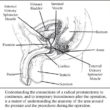
Surgical margins of resection are the very outer edges of the surgical specimen, the interface between the tissue that was removed and that left behind.
Seminal vesicles are attached to the prostate like Mickey Mouse ears. They store the semen. They are removed along with the prostate. They are a frequent area of early local spread of prostate cancer.
The value of postoperative radiotherapy has been controversial, but my recent studies published in CA-A Cancer Journal for Clinicians and recent studies by Dr. Richard Valicenti reported in the International Journal of Radiation Oncology, Biology, & Physics provide evidence of its effectiveness.
Postoperative radiotherapy (adjuvant radiotherapy) is controversial because not all patients with adverse pathological findings will have tumor recurrence. In fact, only about 20% to 30% of patients with tumor extension beyond the prostate or other measurable surgical margins associated with low or moderate Gleason grade tumors subsequently will have rising PSA levels. Therefore, many of these patients opt to be followed while monitoring their PSA levels.
Recurrence rates are higher (50% to 85%) in men with high-grade tumors, seminal vesicle invasion, or lymph node metastases. These higher-risk patients are also more likely to develop metastases in other places, rather than local recurrence in the “bed” of the prostate.
The theoretical advantage of radiotherapy three to six months after surgery is that it is more likely to be successful when the tumor is smaller, before the PSA begins to rise. The downside is that it may be over-treatment with unnecessary side effects for patients who will never have tumor recurrence, and it may be inadequate treatment for those whose tumor has already spread to sites away from the prostate.
The patient has to be involved in the choice of whether or not he wants the postoperative radiotherapy. It usually hinges on how much he fears the potential side effects of radiotherapy. The risks of radiation therapy after prostate cancer surgery include a 3% to 4% rate of permanent injury to the rectum (causing rectal bleeding, diarrhea, and rectal urgency) or the bladder (causing bladder bleeding, urinary urgency, and a small capacity bladder) and a 50% risk of damage to the neurovascular bundles resulting in delayed impotency.
Still, from a cancer control standpoint, it’s always safest to go ahead with the radiation in patients whose pathology report after a radical prostatectomy shows adverse findings. Increasing evidence suggests that giving radiotherapy before the PSA level rises about 1 is preferable.
My results show a 10% to 20% higher likelihood of maintaining an undetectable PSA level in patients with all types of adverse pathologic finds and all Gleason grades.
In my series, in patients who elected to delay receiving radiotherapy until their PSA level rose, 68% had an undetectable PSA following radiotherapy. Of patients whose PSA level was still detectable after surgery or who had rising levels within six months of surgery, 33% had undetectable PSA levels after radiotherapy.
In the first group, the PSA levels became undetectable after surgery and only after a long time did they begin to creep up. This group is a relatively favorable one for radiation therapy.
In the second group, the levels either did not become undetectable after surgery or they began to rise very soon after surgery. This group is a less favorable one that is more likely to have distant metastases.
Dr. Valicenti and associates recently reported that at four years after surgery, 88% of the patients who had the radiotherapy also had undetectable PSA levels, compared to 55% of the patients who did not have the auxiliary treatment. Dr. Valicenti’s studies also suggest that a higher radiation dose (64.8 Gy) produces better results than lower radiation doses.